




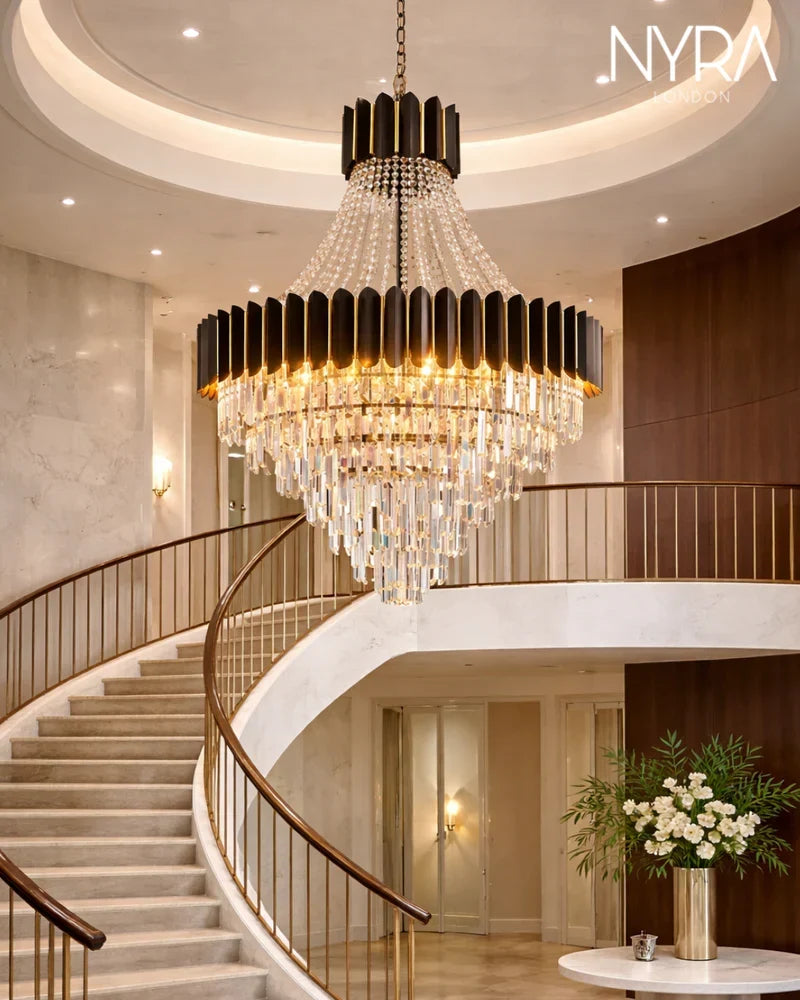
A stairwell is the one place in a house where lighting is a safety feature before it is a design feature. It is also, in a double height space, the single best opportunity you have to do something dramatic.
Both things are true at once, and the good news is they do not conflict. A well lit staircase is safer and more beautiful than a badly lit one. What follows covers the safety part first, because it is the part that has rules, and then the part that gets photographed.
Safety first: light the treads, not the void
The purpose of stair lighting is to let people see the edge of each step. That sounds obvious, and it is exactly what a beautiful chandelier hanging in the middle of a stairwell often fails to do.
Three principles.
Light the nosings. The nosing is the front edge of each tread, and it is the thing your eye needs to locate. Light that reveals the edge of every step is doing its job. Light that creates a flat wash where the steps blur together is dangerous, however lovely the fitting is.
Avoid glare on the way down. Someone descending is looking down and forward. If a bright source sits in that sightline, they are partially blinded exactly where they most need to see. This is why a big exposed lamp low in a stairwell is a genuinely poor idea.
Avoid heavy shadows and dark steps. Even lighting matters more than bright lighting. One deeply shadowed step in an otherwise lit flight is a trip hazard, because the eye reads it as flat.
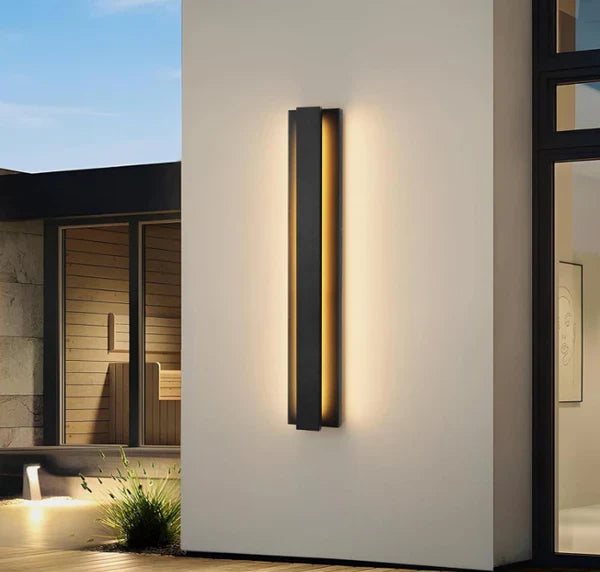
If the chandelier is the only light and it cannot do all three, add a second layer. Wall lights up the stair run, or step lights in the string, will do what a central pendant cannot.
Two way switching is not optional
You must be able to switch the stair light on and off from both the top and the bottom.
This is basic, it is standard practice, and it is still missed in renovations. If you can only switch the stairs from the bottom, then every trip downstairs at night ends with someone walking back up in the dark, or leaving the light on all night.
Ask your electrician for two way switching before first fix. Retrofitting it later means chasing walls.
The chandelier: sizing a double height stairwell
Now the good part. A stairwell with a double height void is one of very few places in a house that can take a genuinely large fixture, and undersizing it is the most common mistake.
Diameter. Add the stairwell's length and width in feet. That number in inches is roughly your ideal chandelier diameter. A stairwell 8ft by 10ft suggests around an 18 inch fixture. It is the same formula used for rooms, and it stops you buying something that looks lost in the space.
Drop length. This is the number specific to double height spaces. The chandelier should drop approximately half to two thirds of the total ceiling height. A 6 metre ceiling suggests a 3 to 4 metre drop. All NYRA chandeliers include adjustable suspension lengths, so the drop can be tuned on site.
Clearance. Maintain a minimum 2.1m clearance from any walking area. This is the number that overrides aesthetics. If the bottom of your beautiful cascade sits at head height above a landing, it is wrong regardless of how it looks in the photograph.
Where to hang it. In the centre of the stairwell void, so it reads from both the ground floor and the landing. If your stairwell has a window facing the street, positioning the fixture so it is visible through that window is the move that makes a house look considered from outside.
Fixtures that suit stairwells
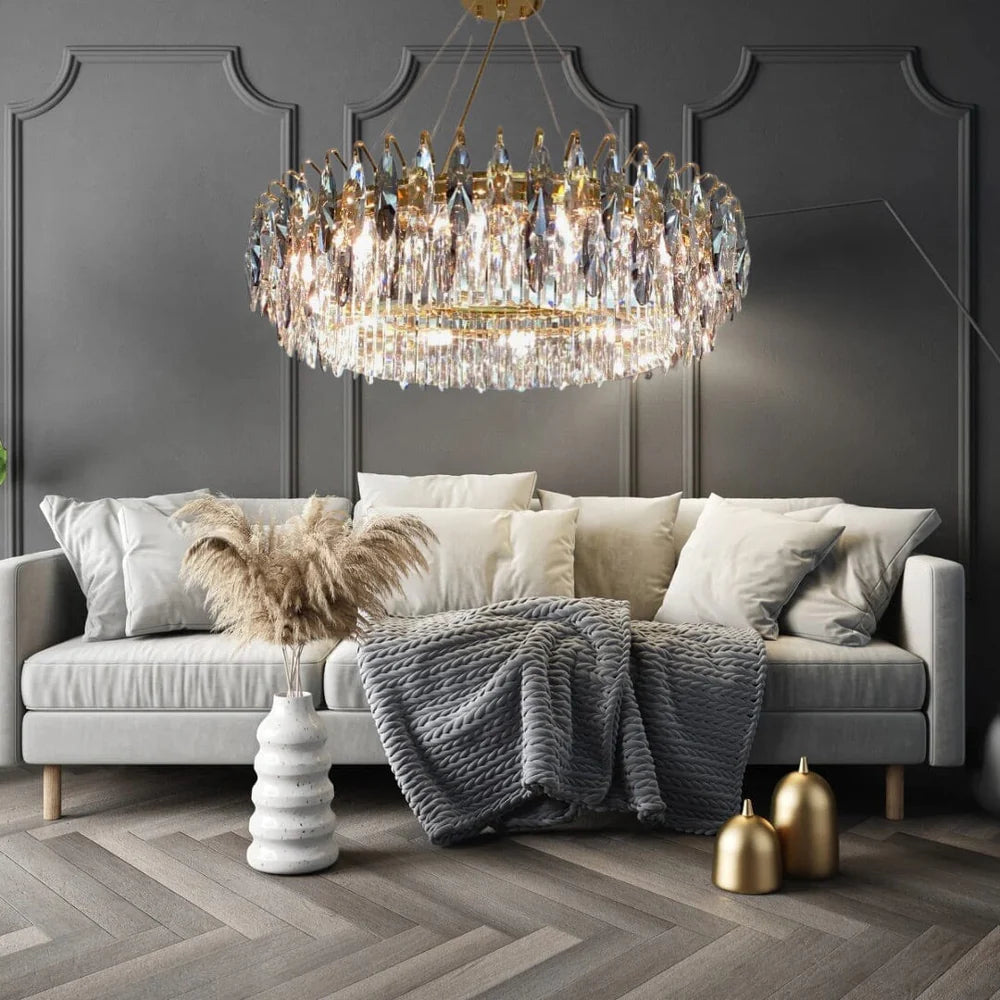
Cascading and waterfall designs are the natural fit for a tall void, because they occupy vertical space rather than fighting it. That is exactly what a double height stairwell has to give.
-
Luxury Spiral Crystal Chandelier, from $2,959. A spiral follows the geometry of a turning stair, which is why this shape recurs in stairwells.
-
Ethereal Icefall Crystal Chandelier, from $4,150, for a full cascade in a tall void.
-
Xenara Large Crystal Chandelier, from $3,759.
-
Ariana Chandelier, from $2,950, and Hilton Chandelier, from $2,950, both designed for staircase and foyer positions.
-
Celine Chandelier, from $1,260, and Elodie Crystal Chandelier, from $1,299, for a more restrained budget.
-
Rodela Crystal Chandelier, from $1,099, for smaller stairwells.
-
French Empire Chandelier, $3,700, for period properties.
See the full staircase chandelier collection.
The question nobody asks until it is too late: how will you clean it
Take this seriously. A crystal chandelier 5 metres above a flight of stairs is not something you can reach with a stepladder, because you cannot safely stand a ladder on stairs.
Your options, in order of sense:
A winch or lowering mechanism, specified at installation. Expensive, and the only genuinely convenient answer for a very tall void.
Scaffold tower access, which is what most people end up paying for, once every year or two.
Choosing a fixture that hides dust well. Smooth glass and simple geometry stay looking clean far longer than a thousand small crystals.
Ask yourself honestly how you will maintain it before you buy. A dusty chandelier is worse than no chandelier, and a stairwell fixture you cannot reach is one you will not clean.
Weight and installation
Stairwell chandeliers are often the heaviest fixture in a house, and they hang over the one place where a failure would be worst.
Most chandeliers suit ceilings 2.4m and above. For any fixture exceeding 10kg, professional installation and reinforced ceiling support are advised. This is not a DIY job, and the ceiling structure needs checking before the fixture arrives, not after.
Bulbs are included with NYRA fixtures unless otherwise stated, and fixtures can be made dimmable with a compatible dimmer switch. Ceiling plates can be manufactured for sloped or angled ceilings on request, which matters in stairwells more than anywhere, since so many have a raked ceiling on one side.
Colour temperature
Warm white, 2700K to 3000K, for stairwells in homes. It is welcoming, and a stairwell is usually visible from living space, so it needs to match.
Cool white, 3500K to 4000K, gives clearer definition on treads, which is worth considering if safety is the priority, for example in a home with elderly residents. If you go this route, keep it consistent with adjacent spaces or the transition will look wrong.
Dimmable is the best answer either way: bright when you are carrying a laundry basket down, low as a night light.
A working checklist
-
Confirm two way switching at top and bottom before first fix.
-
Check the light reveals the nosing of every tread.
-
Add wall or step lights if the chandelier cannot light the treads evenly.
-
Size the chandelier by stairwell length plus width in feet, as inches of diameter.
-
Set drop at half to two thirds of ceiling height.
-
Keep 2.1m minimum clearance above all walking areas.
-
Confirm ceiling structure for anything over 10kg.
-
Decide how you will clean it before you buy it.
Getting the drop right
Drop length in a double height space is the hardest thing to judge from a product photo, and the most consequential. NYRA offers free one to one video consultations. Send your stairwell dimensions, ceiling height and a photo, and the team will recommend diameter and drop.
Browse staircase chandeliers and foyer lights, or book a consultation.
FAQ
What size chandelier for a staircase?
Add the stairwell's length and width in feet, and use that number in inches as the diameter. An 8ft by 10ft stairwell suggests roughly an 18 inch fixture.
How long should a staircase chandelier drop be?
Approximately half to two thirds of the total ceiling height. A 6 metre ceiling suggests a 3 to 4 metre drop. Always maintain at least 2.1m clearance above walking areas.
How do you clean a chandelier over a staircase?
Either specify a winch or lowering mechanism at installation, or budget for scaffold tower access every year or two. You cannot safely use a ladder on stairs. Choosing a simpler fixture that hides dust is the cheapest answer.
Do stair lights need two way switching?
Yes. You should be able to switch the stair light from both the top and the bottom. Retrofitting this later means chasing walls, so specify it before first fix.
Is a chandelier enough to light a staircase?
Often not on its own. The priority is revealing the nosing of every tread evenly and without glare in the descending sightline. If the chandelier cannot do that, add wall lights along the run or step lights in the string.


Leave a comment
All comments are moderated before being published.
This site is protected by hCaptcha and the hCaptcha Privacy Policy and Terms of Service apply.