





Here is the answer most articles will not give you: soft white and warm white are marketing terms, not technical standards. No regulation defines them. Two brands can put the same label on bulbs that produce visibly different light, and both are within their rights.
That is genuinely the most useful thing to know about this comparison, because it changes what you do about it. You stop shopping by the word on the box and start shopping by the number.
What the labels usually mean
Despite the inconsistency, there are conventions, and they are worth knowing.
Soft white typically means around 2700K. It is the warmer of the two, closer to the yellow glow of an old incandescent bulb. In the United States this is the most common label on domestic bulbs.
Warm white typically means around 2700K to 3000K. In UK and European labelling, warm white often covers the whole domestic warm range, including what an American brand would call soft white.
So the honest summary: if there is a difference, soft white is usually 2700K and warm white is usually 3000K, and 3000K is slightly crisper and less yellow. But the labels overlap so much between brands and regions that the words alone cannot be trusted.
The number is what matters
Every bulb worth buying prints its colour temperature in Kelvin on the box or the listing. Ignore the adjective, find the number.
-
2700K: warmest domestic light. Yellow, cosy, closest to old incandescent bulbs.
-
3000K: still warm, slightly cleaner and whiter. Less yellow cast on white surfaces.
-
3500K: neutral. Neither warm nor cool.
-
4000K: cool white. Crisp, alert, less flattering.
The gap between 2700K and 3000K is real but subtle. You will notice it if you put the two side by side. You will probably not notice it walking into a room, unless the room contains both, which is exactly the problem discussed below.
If you want the full explanation of what Kelvin measures and why lower numbers look warmer, our guide to colour temperature and choosing the right bulb covers it properly.
Which to use where
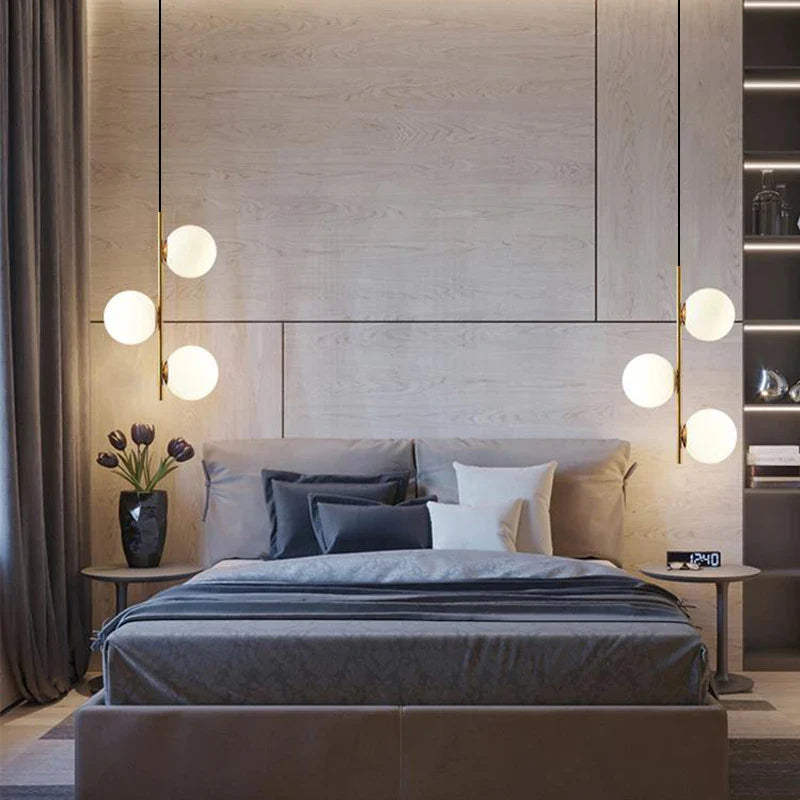
2700K, the warmer end, suits anywhere you relax or wind down.
-
Bedrooms, especially bedside lighting
-
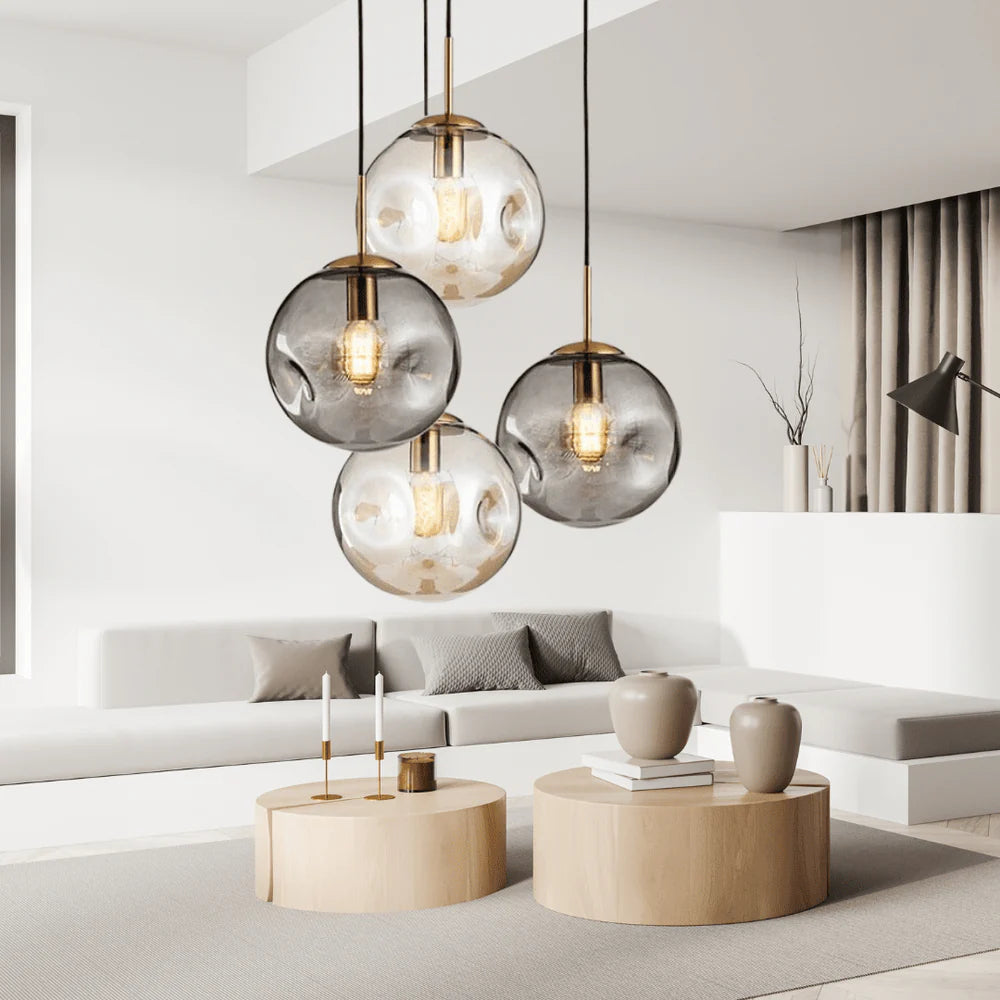
Living rooms
-
Dining rooms
-
Anywhere with warm materials: wood, brass, terracotta, warm paint
It flatters skin, it makes brass and timber look rich, and in the evening it reads as "the day is ending," which is exactly what you want in a bedroom.
3000K, the slightly cleaner end, suits rooms that work as well as relax.
-
Kitchens that double as living space
-
Bathrooms
-
Hallways
-
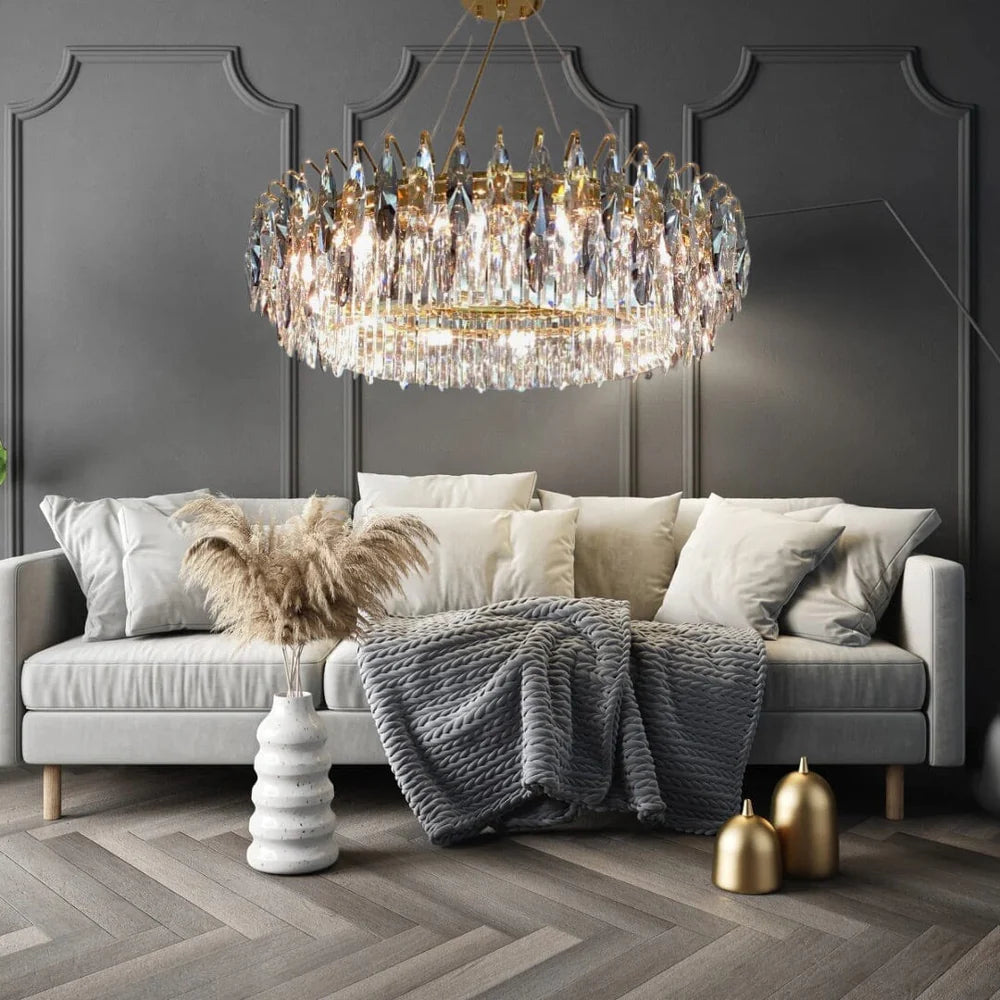
Interiors with cooler materials: grey, white, chrome, marble
It keeps whites looking white rather than cream, and it gives a little more clarity for tasks without tipping into clinical.
The material rule is more useful than the room rule. Warm light on warm materials is beautiful. Warm light on a cool grey and chrome kitchen can make everything look slightly dirty. Match the light to the palette, not just to the room name.
The mistake that actually matters
Choosing 2700K when 3000K would have been marginally better is not a mistake. Nobody will ever notice.
Mixing them in the same room is a mistake, and everybody notices, even if they cannot say why.
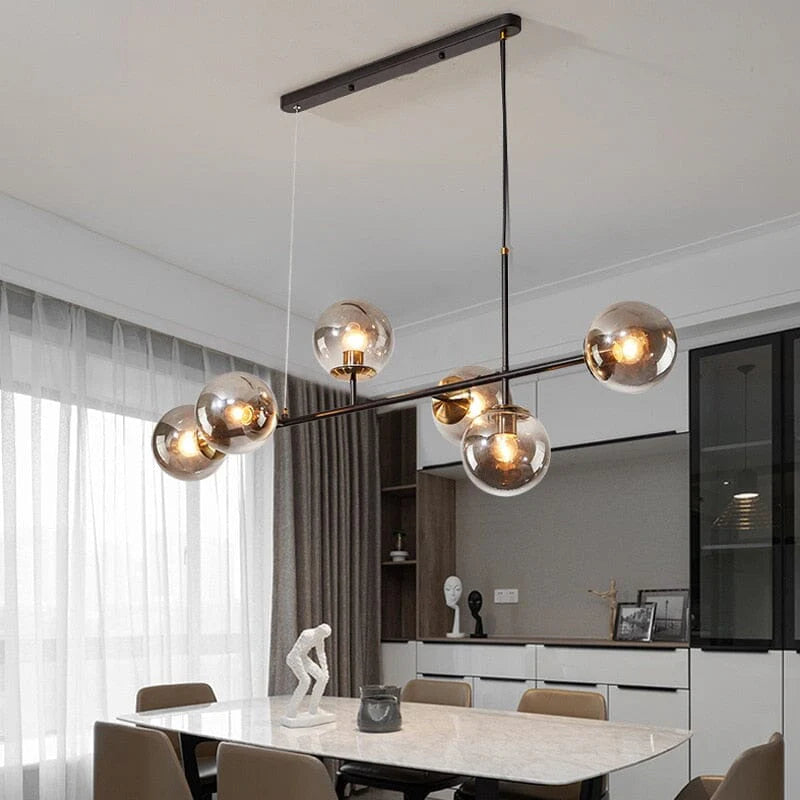
A 2700K pendant next to a 3000K downlight in one kitchen produces a subtle mismatch that reads as wrong. The room looks patchy. Expensive fixtures look cheap. And because the difference is subtle, people rarely diagnose it, they just feel the room is off.
This is far more common than it should be, because bulbs get replaced piecemeal over years. Someone buys a four pack of whatever was on the shelf, and now one lamp in the room is a different colour to the others.
Pick one temperature per room. Write it down. Buy the same one every time you replace a bulb.
For consistency across a whole scheme, every NYRA fixture can be specified in warm, neutral or cool white when you order, so the entire room matches from day one rather than being corrected later.
Warm dimming, and why dimmed LEDs can disappoint
Old incandescent bulbs did something lovely when you dimmed them: they got warmer as they got dimmer, dropping toward candlelight. It is a large part of why dimmed traditional lighting feels so good.
Most standard LEDs do not do this. Dim them and they get darker at exactly the same colour, which can feel flat rather than cosy.
Fixtures and bulbs with warm dimming, sometimes called dim to warm, replicate the incandescent behaviour. If evening atmosphere in a living room or bedroom matters to you, it is worth asking about specifically, because it is the difference between "less light" and "warmer light."
NYRA fixtures can be made dimmable when paired with a compatible dimmer switch. Ask about dimming behaviour, not just dimming compatibility, if this matters to you.
Colour rendering: the spec nobody checks
Two bulbs can share a Kelvin number and still make your room look completely different, because colour temperature says nothing about how accurately colours appear.
That is colour rendering, usually given as CRI on a scale to 100. Higher is better. A high CRI bulb makes wood look like wood and skin look like skin. A low CRI bulb at the same 2700K can make a warm room look muddy and drain the life out of fabrics.
If you have invested in materials, check this number. It is the reason two "warm white" rooms can feel entirely different in quality.
Quick answers
Which is warmer? Soft white, usually. It typically means 2700K, while warm white often means 3000K. But the labels vary by brand and region.
Which is better? Neither. 2700K for relaxing rooms and warm materials, 3000K for working rooms and cool materials.
Can I mix them? In different rooms, yes, easily. In the same room, no. That is the one rule that matters.
Do I need to care about the difference? Less than you think. Care much more about consistency, about CRI, and about whether your fixtures dim.
Getting it right from the start
The simplest way to avoid the mismatch problem entirely is to specify colour temperature when you buy the fixture rather than fixing it later with bulbs. Every NYRA piece can be made in warm, neutral or cool white, and bulbs are included unless otherwise stated.
Not sure which suits your room? NYRA offers free one to one video consultations. Send a photo of your space and the team can advise on temperature alongside sizing.
Browse the full lighting range, or book a free consultation.
FAQ
Is soft white the same as warm white?
Often, yes. Both are marketing terms with no fixed definition. Soft white usually means around 2700K and warm white usually means 2700K to 3000K, but the labels overlap and vary between brands and regions. Check the Kelvin number rather than the name.
Which is warmer, soft white or warm white?
Soft white is usually the warmer of the two at around 2700K, with warm white often at 3000K. The difference is subtle and only obvious when the two are side by side.
Can I mix soft white and warm white bulbs?
In different rooms, yes. In the same room, no. Mixed colour temperatures in one space produce a patchy look that makes even expensive fixtures seem cheap.
Which should I use in a bedroom?
2700K. It is the warmest domestic option, it flatters, and it is lower in blue content, which suits evening use.
Which should I use in a kitchen?
3000K generally, particularly if your kitchen has cool materials such as grey cabinetry, chrome or marble. 2700K works well in kitchens with wood and brass, or kitchens that open into living space.
Why does my dimmed LED look flat compared to an old bulb?
Standard LEDs get darker without getting warmer, unlike incandescent bulbs which shift toward candlelight as they dim. Look for dim to warm or warm dimming fixtures if evening atmosphere matters.



Leave a comment
All comments are moderated before being published.
This site is protected by hCaptcha and the hCaptcha Privacy Policy and Terms of Service apply.