



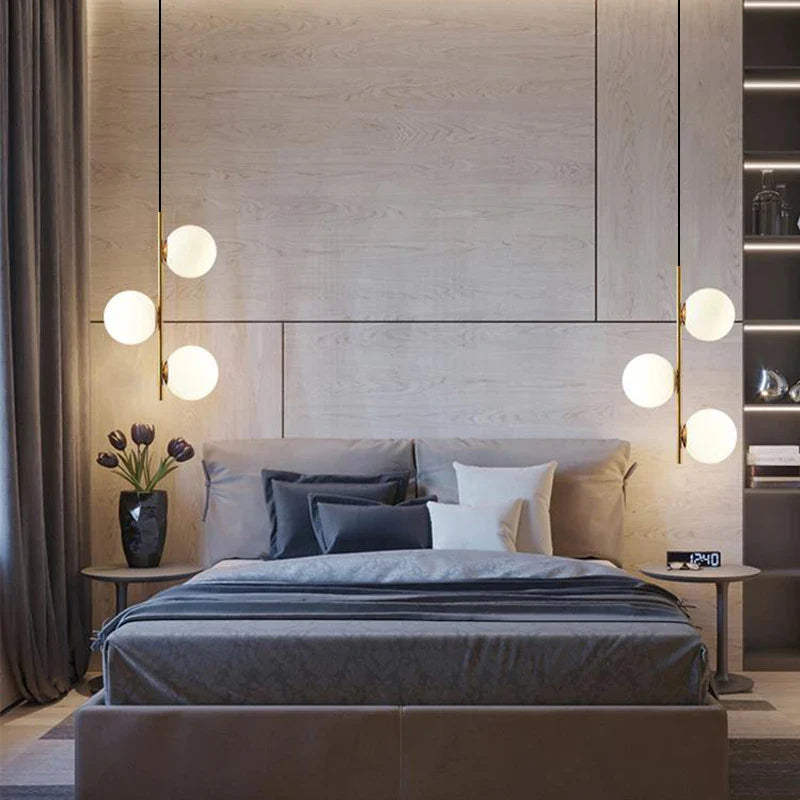
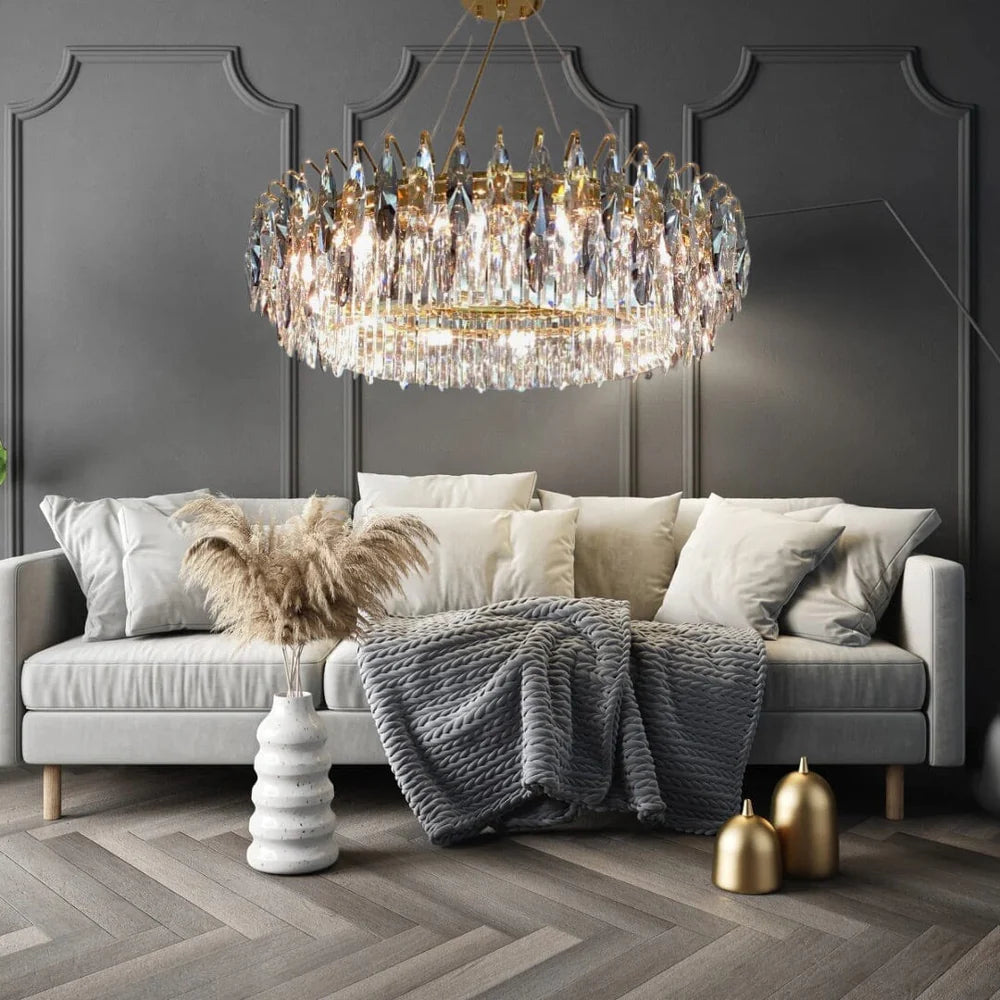
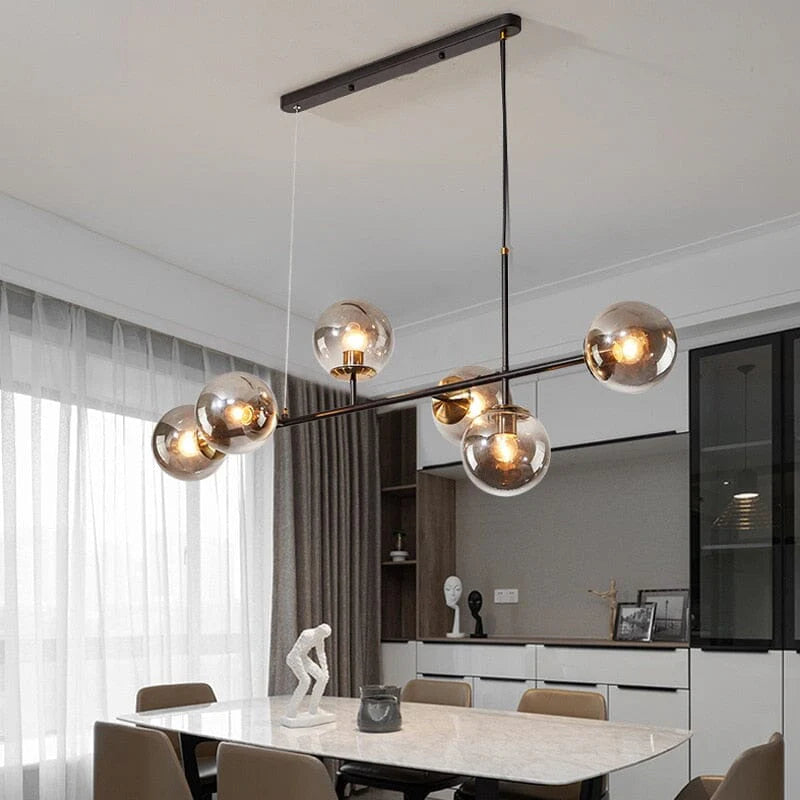
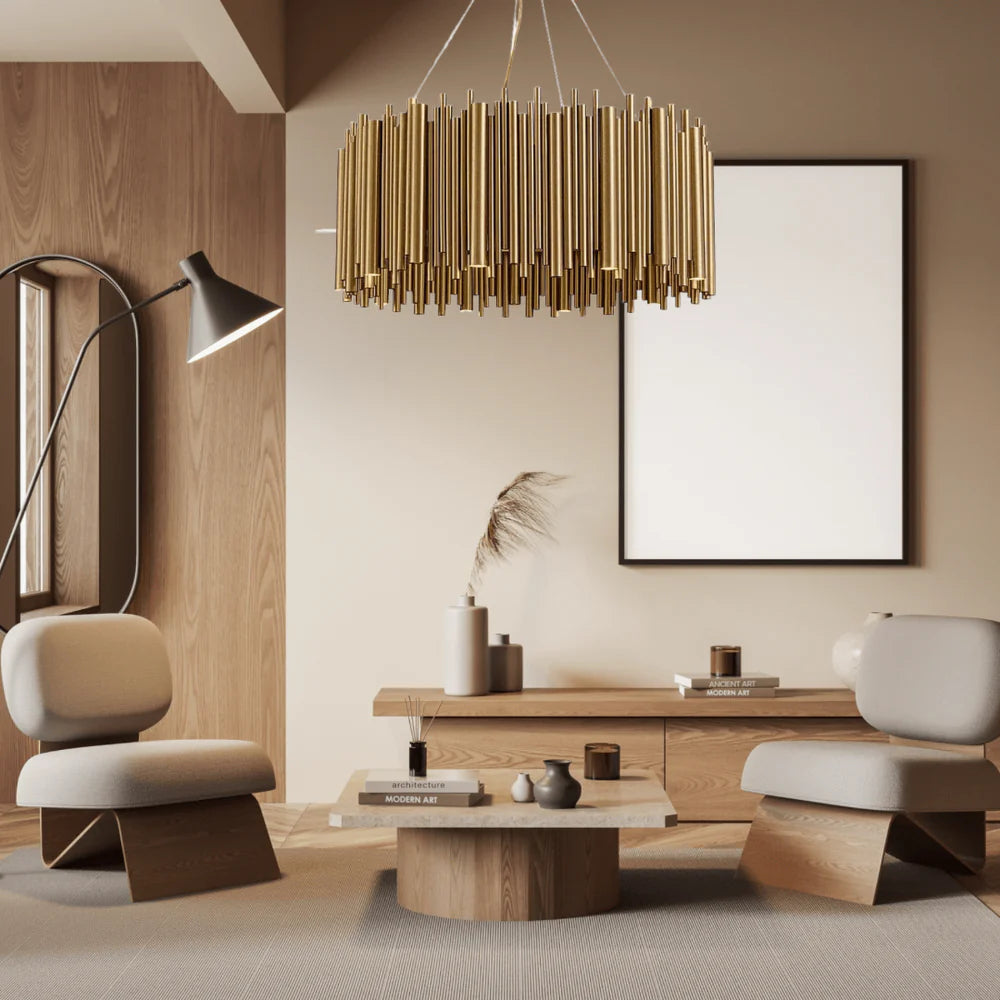
Most kitchens are lit by one thing: a single ceiling fixture in the middle of the room. It is the reason so many kitchens feel flat, and it is also the reason you end up chopping vegetables in your own shadow.
The fix is not a brighter bulb. It is layers. Every well lit kitchen uses three of them, and once you understand what each layer does, the choices stop being guesswork.
The three layers, and what each one is for
Task lighting is the light you work under. It sits directly above the surfaces where you prep, chop and cook, which usually means the island and the worktops. Task light needs to be bright, and it needs to come from in front of you or above you rather than behind, or your own body blocks it.
Ambient lighting is the general fill that stops the room feeling like a stage set. It comes from ceiling fixtures and lifts the overall level so the space reads as one room rather than a few bright pools.
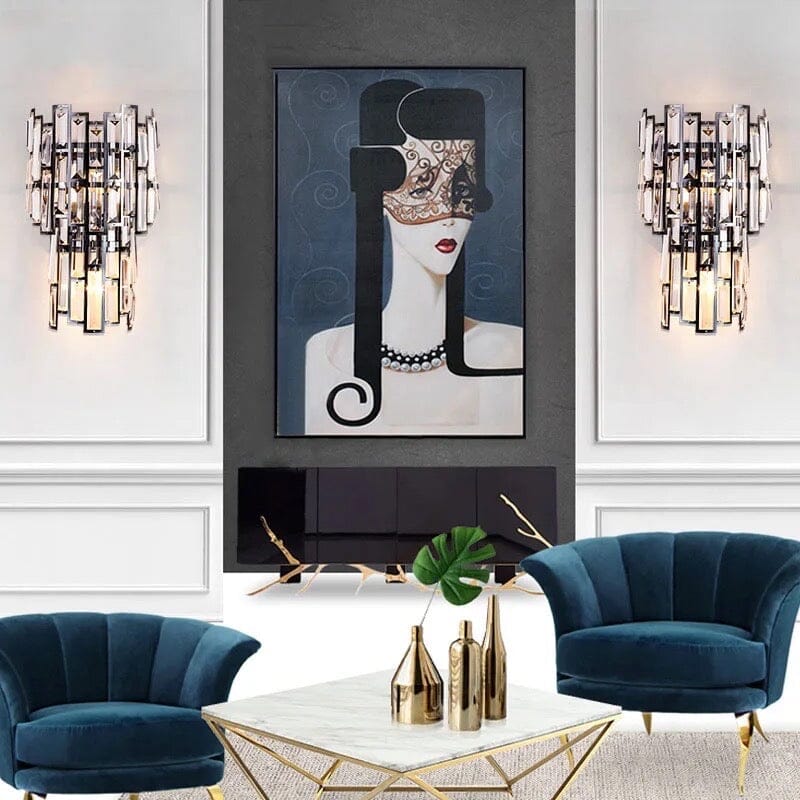
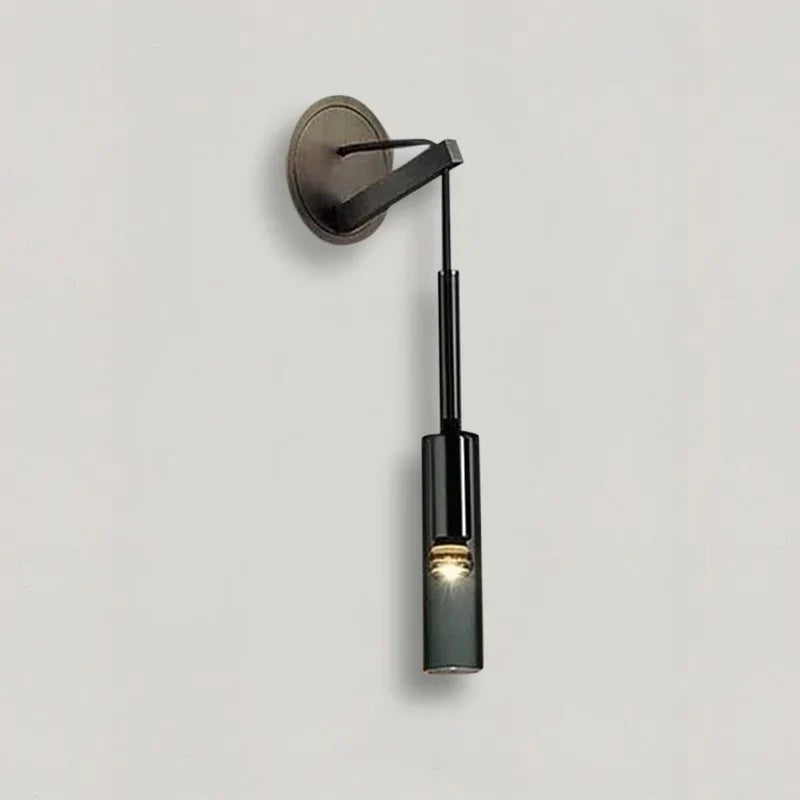
Accent lighting is the layer that does the emotional work. A chandelier over a dining end, a pendant over a breakfast nook, light inside glass cabinets. It is not there to help you see. It is there to give the room depth and a focal point.
Get all three on separate switches, ideally dimmable, and one kitchen can do bright weekday breakfast and low key dinner party without changing a single fixture.
Layer one: task lighting over the island
The island is where most kitchen lighting decisions are won or lost, because pendants over an island are the most visible fixture in the room and the easiest to get wrong.
Two numbers matter more than anything else.
How many pendants. As a guide, use two pendants over a 1.2m island, three over a 1.8m island, and three to four over a 2.4m or larger island. Fewer, larger pendants usually look more considered than a row of small ones.
How high to hang them. Suspend pendants roughly 75 to 90cm above the countertop. High enough that they light the surface, low enough that they still feel deliberate, and never so low that they block the sightline across the room. All NYRA pendants come with adjustable drop lengths, so you can fine tune once they are up.
For spacing, allow 15 to 30cm between pendants and keep at least 15cm back from each end of the island. On sizing, 25 to 35cm diameter pendants suit a standard island, and 35 to 45cm suits a large one.
Pieces that work well here:
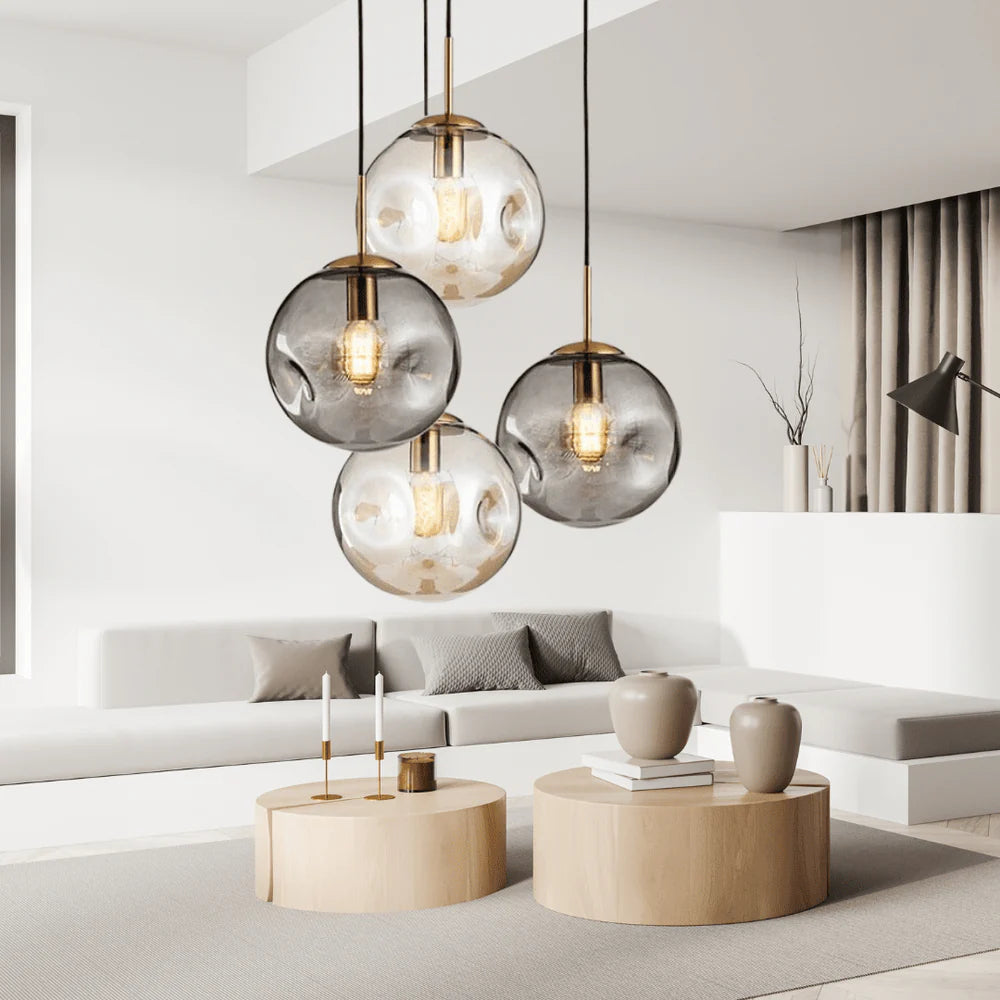
Henry Glass Pendants $459.
A glass dome shape, which is the classic island pendant for a reason: the dome throws light down onto the worktop instead of sideways into your eyes.
Gisela Pendants
From $250. A softer water drop form for kitchens where you want the fixture to read as decorative as well as functional.
Nimbus Glass Pendant Light
From $149. The entry point if you are lighting a smaller island or a run of two.
Roland Glass Lights $349. Browse the full range in pendant lighting.
Layer one, continued: the worktops nobody lights
Islands get all the attention. The perimeter worktops, where you actually do most of the chopping, usually get nothing but the ceiling light behind you, which means you work in your own shadow.
Under cabinet lighting solves this completely and costs very little. It is the single highest value, lowest glamour upgrade in a kitchen. If you are doing a renovation, specify it now while the walls are open.
Layer two: ambient light that does not flatten the room
Ambient light should be even and unobtrusive. Flush mount ceiling fixtures do this well in kitchens with standard ceiling heights, because they spread light without hanging into the space.
The mistake here is treating ambient light as the main event and turning it up until the room is uniformly bright. Uniform brightness is what makes a kitchen feel like an office. Keep ambient light as fill, and let the task and accent layers do the shaping.
Look at flush mount ceiling lights for this layer.
Layer three: accent light and the dining end
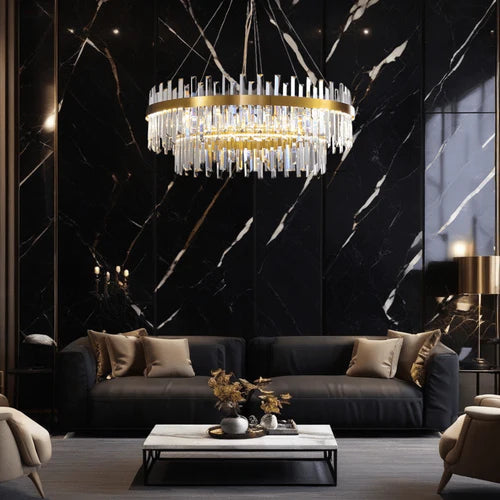
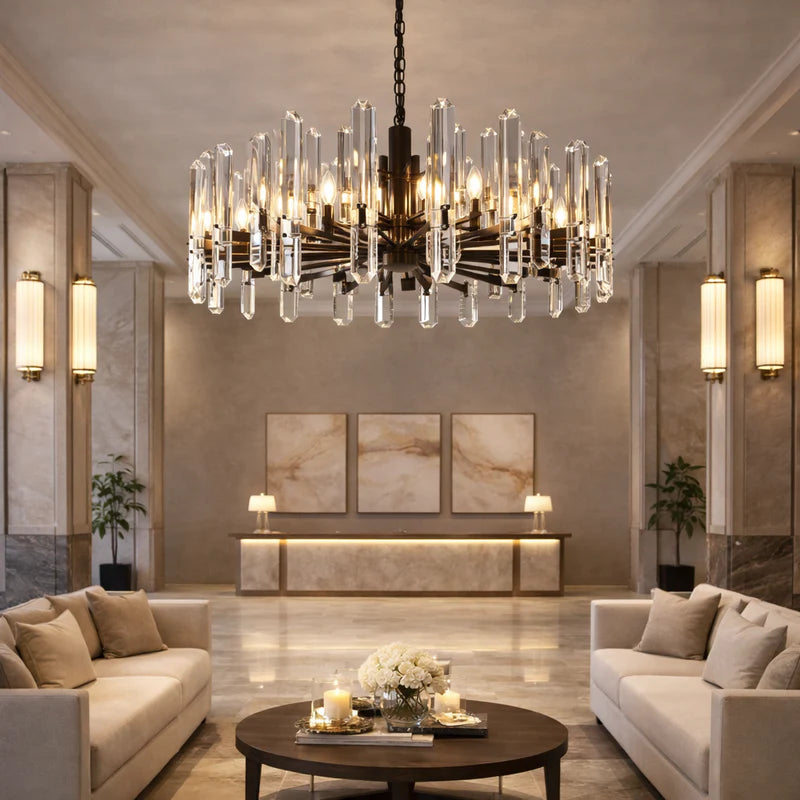
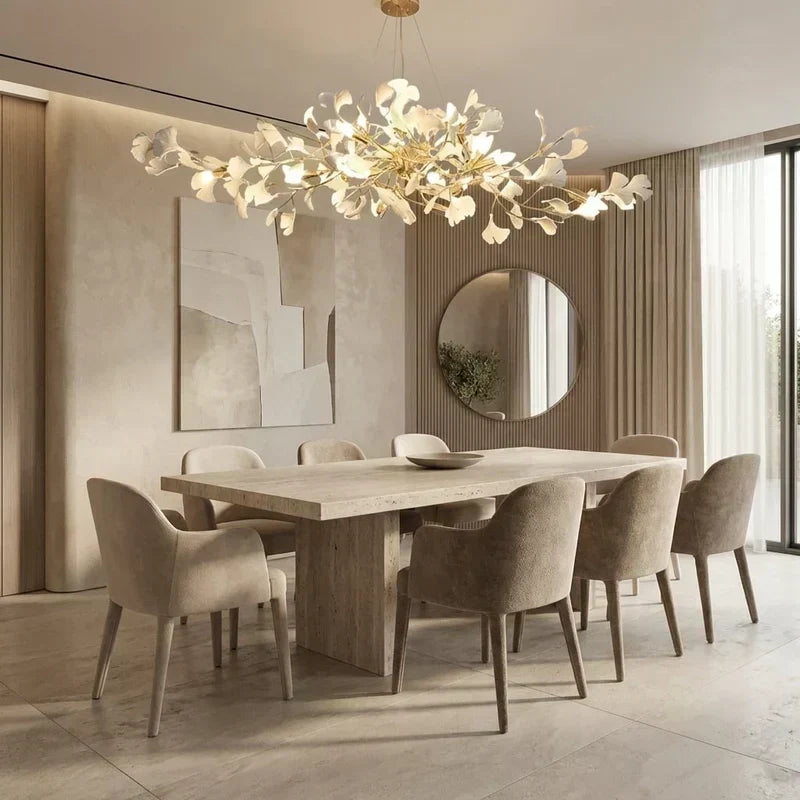
If your kitchen runs into a dining table or a banquette, that is where the accent layer earns its keep. A chandelier or a sculptural pendant over the table separates the eating zone from the working zone visually, without a wall.
Sizing over a dining table follows a different rule to the island: the fixture should be roughly half to two thirds the width of the table. A 180cm table takes a 90 to 120cm fixture. Hang it 75 to 90cm above the tabletop.
Options worth considering:
Freya Glass Chandelier
From $1,250, for a statement over a dining end.
Royal Russian Ring Chandelier
From $759, when you want a defined circular anchor above the table.
Boho Wasabi Chandelier
From $499, for kitchens leaning natural or textured.
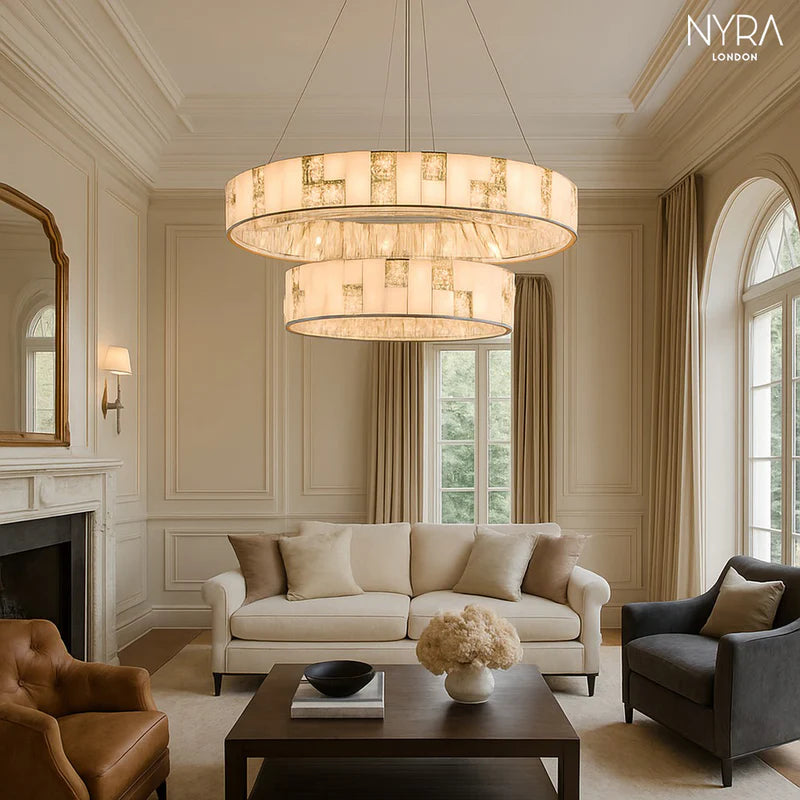
Ethereal Glow Marble Pendant
From $449, for a warmer, stonier material palett
Colour temperature: the decision that changes everything
You can install perfect fixtures and still get a kitchen that feels wrong, because the bulb colour is off.
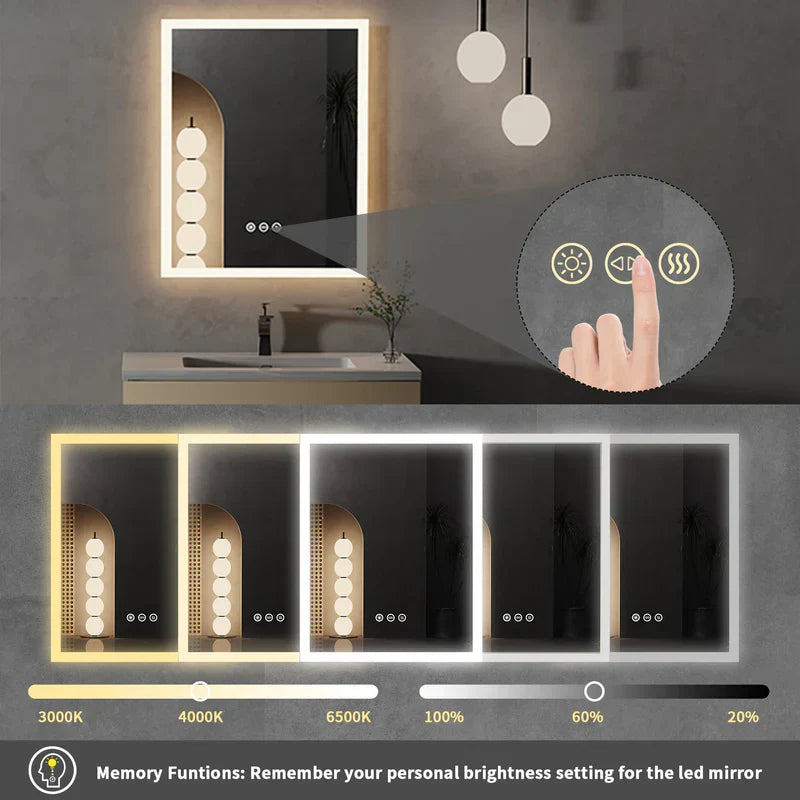
Warm white, around 2700K to 3000K, is the standard for kitchens that double as living space. It is flattering, it makes wood and brass look good, and it reads as domestic.
Neutral white, around 3500K to 4000K, is crisper and more clinical. It has its place in a very white, very modern kitchen, or specifically over prep areas where colour accuracy matters.
The rule that matters more than which you choose: be consistent. Mixing 2700K pendants with 4000K downlights in the same room is the most common lighting mistake in kitchens, and it makes an expensive kitchen look cheap. Pick one temperature and hold it across every fixture in the space.
Every NYRA fixture can be specified in warm, neutral or cool white, so you can match the whole room from the start rather than discovering the mismatch after installation.
Put the layers on separate circuits
This is the part people skip and regret. Three layers on one switch is not three layers, it is one layer with extra fixtures.
Ask your electrician for pendants, ceiling lights and accent lighting on separate switches, and make as many of them dimmable as your budget allows. NYRA fixtures can be made dimmable when paired with a compatible dimmer switch. That single decision is what lets one kitchen be a workspace at 8am and a room you actually want to sit in at 8pm.
A simple plan to follow
Mark where you actually work: island, hob, sink, prep run. Those get task light.
Choose island pendants by island length, then set the drop at 75 to 90cm above the counter.
Add under cabinet light to every worktop run you use.
Fill the room with ambient ceiling light, kept modest.
Add one accent piece over the dining end or nook.
Fix one colour temperature across all of it.
Split the layers across switches and dim what you can.
Not sure on scale?
Sizing is the thing people get wrong most often, and it is the hardest to fix after installation. NYRA offers free one to one video consultations. Send your island dimensions and ceiling height and the team will recommend the right number, diameter and drop length for your space.
Start with the kitchen lighting collection, or book a free consultation.
FAQ
How many pendant lights do I need over a kitchen island?
Two over a 1.2m island, three over a 1.8m island, and three to four over a 2.4m or larger island. Space them 15 to 30cm apart and keep at least 15cm from each end.
How high should kitchen pendants hang?
Roughly 75 to 90cm above the countertop. NYRA pendants have adjustable drop lengths so you can adjust after installation.
What colour temperature is best for a kitchen?
Warm white at 2700K to 3000K for kitchens that double as living space, neutral white at 3500K to 4000K for a crisper, more modern look. The important thing is using the same temperature across every fixture in the room.
What size pendants suit a kitchen island?
25 to 35cm diameter for a standard island, 35 to 45cm for a large one. Fewer, larger pendants generally look more refined than several small ones.
Do I really need three layers of lighting?
You need at least two: task light where you work, and ambient fill. The accent layer is what turns a functional kitchen into one that feels designed, and it matters most if your kitchen includes a dining or seating area.


Leave a comment
All comments are moderated before being published.
This site is protected by hCaptcha and the hCaptcha Privacy Policy and Terms of Service apply.