




A bedroom has to do two jobs that pull in opposite directions. It has to be bright enough to find a pair of shoes, read a contract or do your makeup properly. And it has to be soft enough, at the end of the day, to signal to your body that this is where things wind down.
One ceiling light cannot do both. That is the whole problem, and everything below is the solution.
Start with what actually happens in the room
Before choosing a single fixture, list what you do in the bedroom and where you do it. For most people it is some version of: sleep, read in bed, get dressed, and get ready at a mirror or dressing table.
Each of those needs light in a different place. Reading needs light beside the bed, aimed at the page, not at your partner. Dressing needs light you can see colour under. Getting ready at a mirror needs light on your face, not on the top of your head. Winding down needs light that is low, warm and nowhere near your eyeline.
Notice that none of those is "one bright fixture in the centre of the ceiling."
The ceiling fixture: presence without glare
The ceiling piece is still worth getting right, because it is the thing you see when you walk in. It just should not be the only source, and it should not be the one you use at 11pm.
Two questions decide it.
What size? Add your room's length and width in feet, and that number in inches is roughly your ideal chandelier diameter. A 12ft by 14ft room takes about a 26 inch fixture. For ceilings above 2.7m, size up slightly, because a fixture that looks right at 2.4m looks lost at 3m.
How high? Keep the bottom of the fixture at least 2.1m from the floor. If it sits centred above the bed, allow 75 to 90cm of clearance above mattress height, so it feels sheltering rather than looming.
Pieces that suit bedrooms:
-
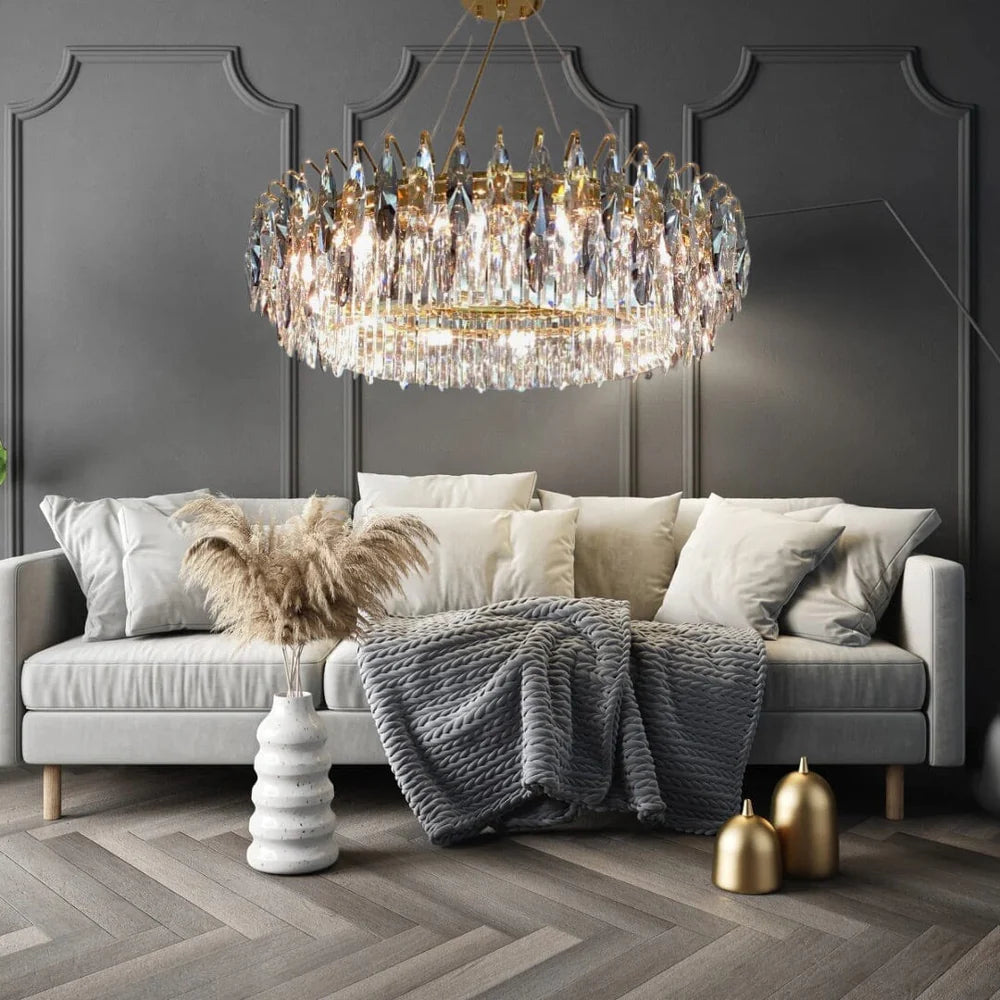
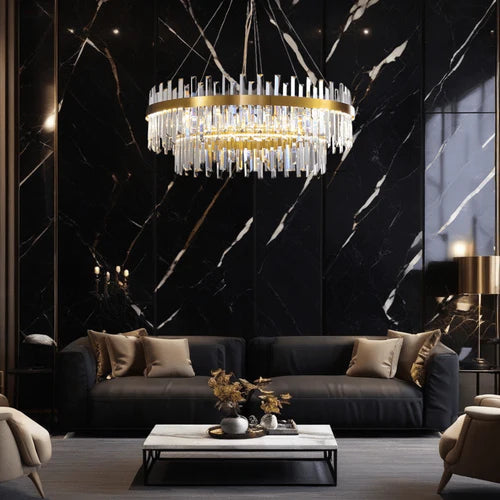
Glimmer Crystal Drum Chandelier, from $349. The drum shade matters here: it diffuses light downward and softens it, which is exactly what you want in a room you lie down in.
-
Ashton Square Ceiling Light, from $499. A flush profile, useful in bedrooms with lower ceilings where a hanging fixture would crowd the space.
-
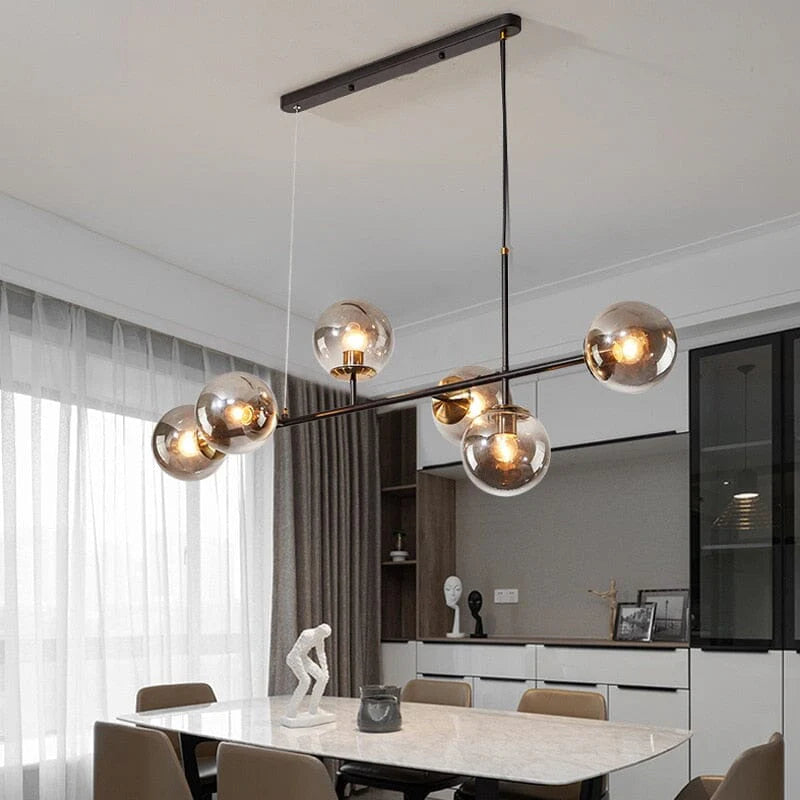
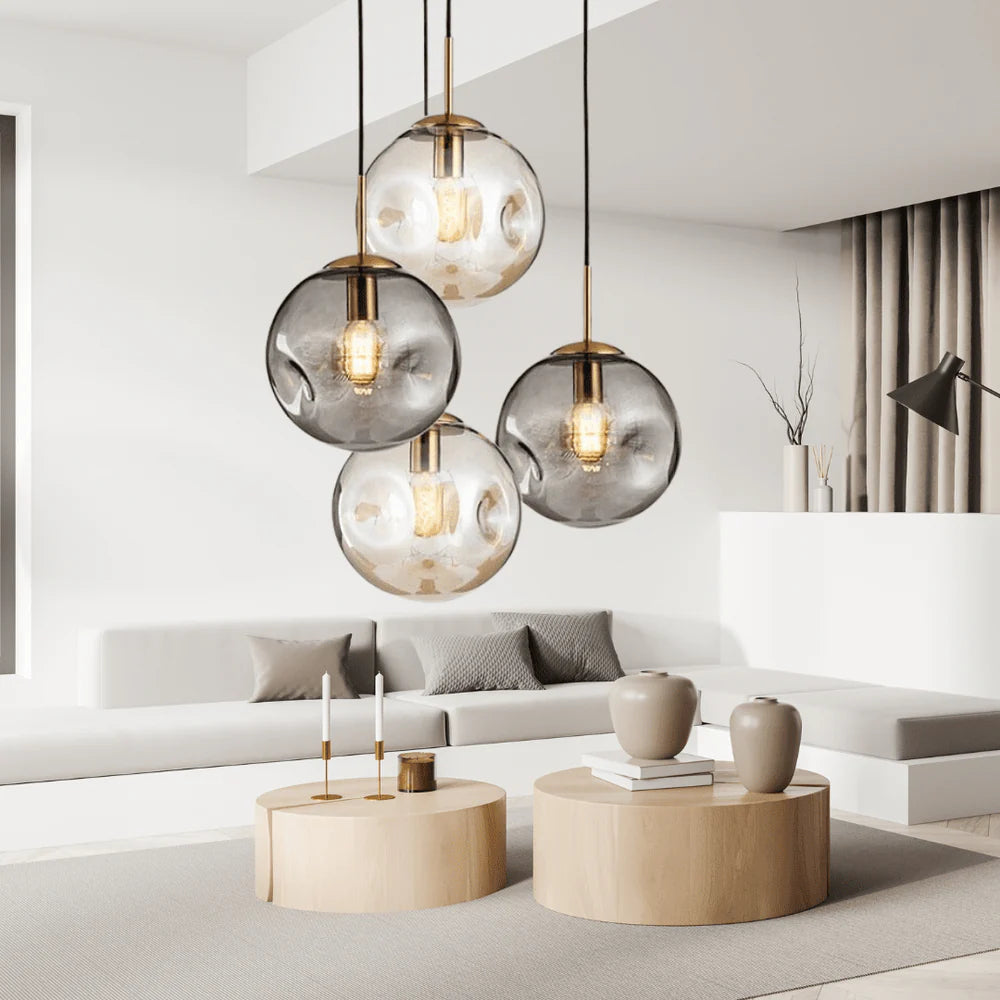
Amber Haven Ceiling Light, from $488. Amber glass warms the light before it ever reaches the room.
-
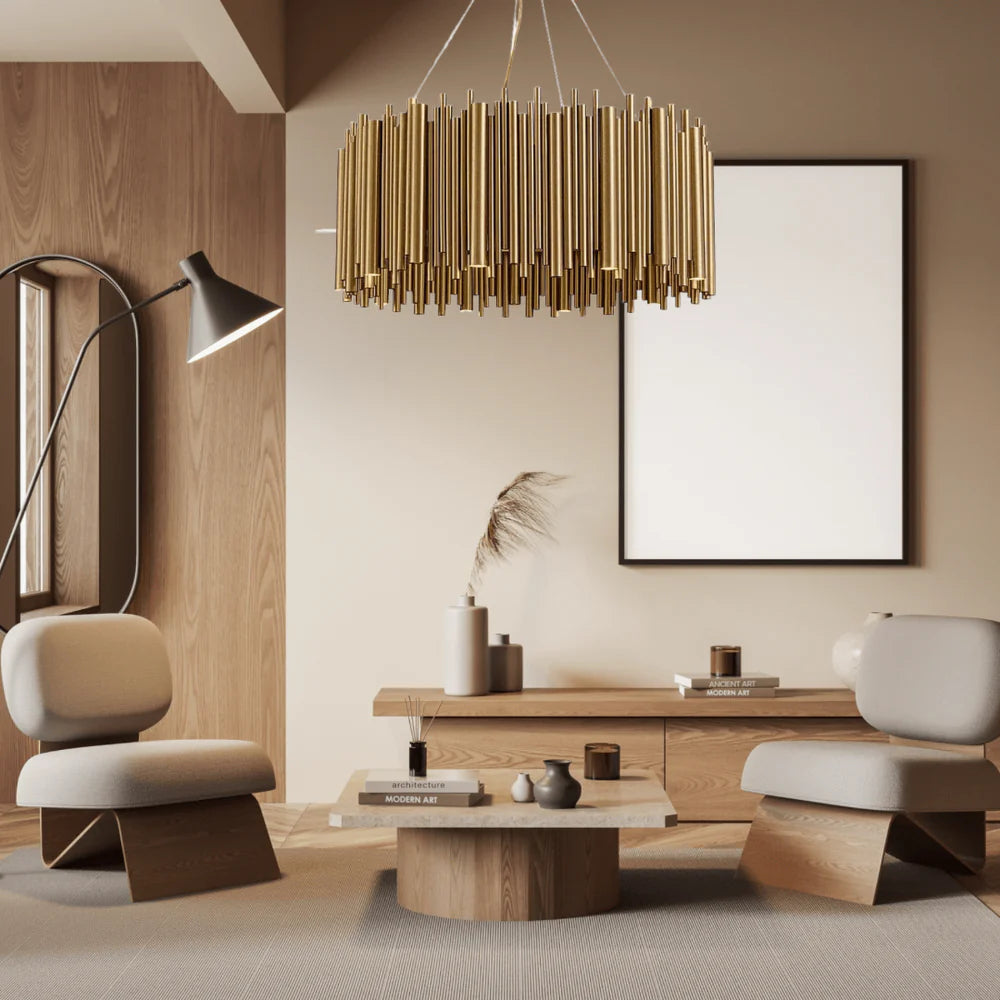
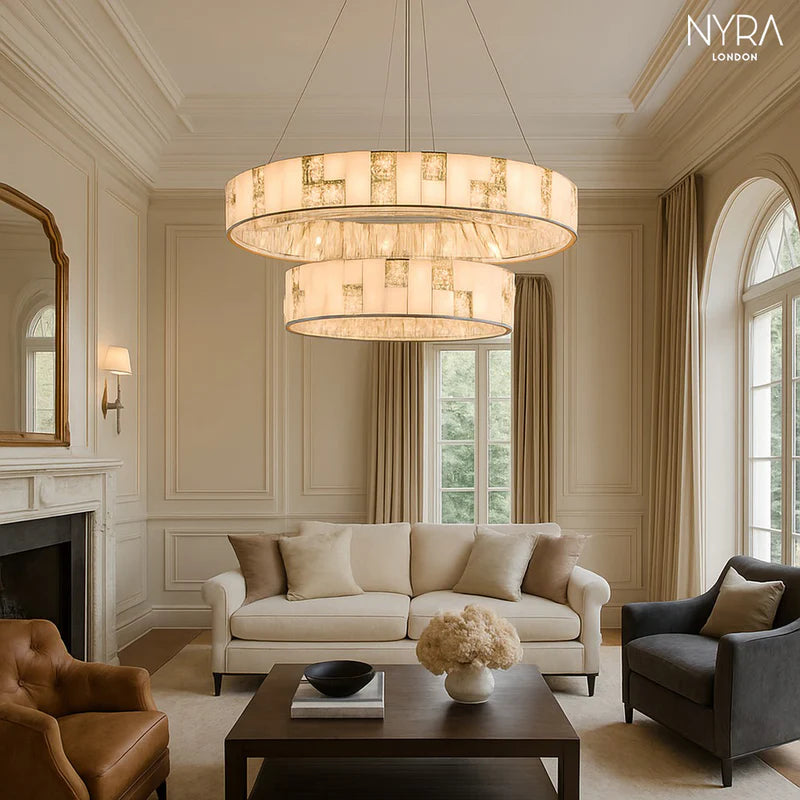
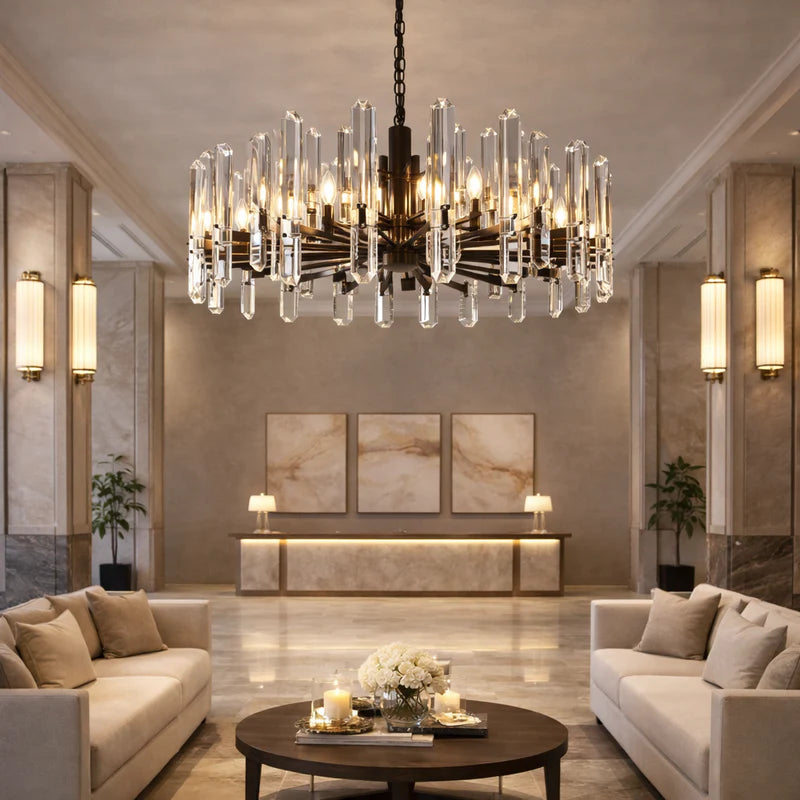
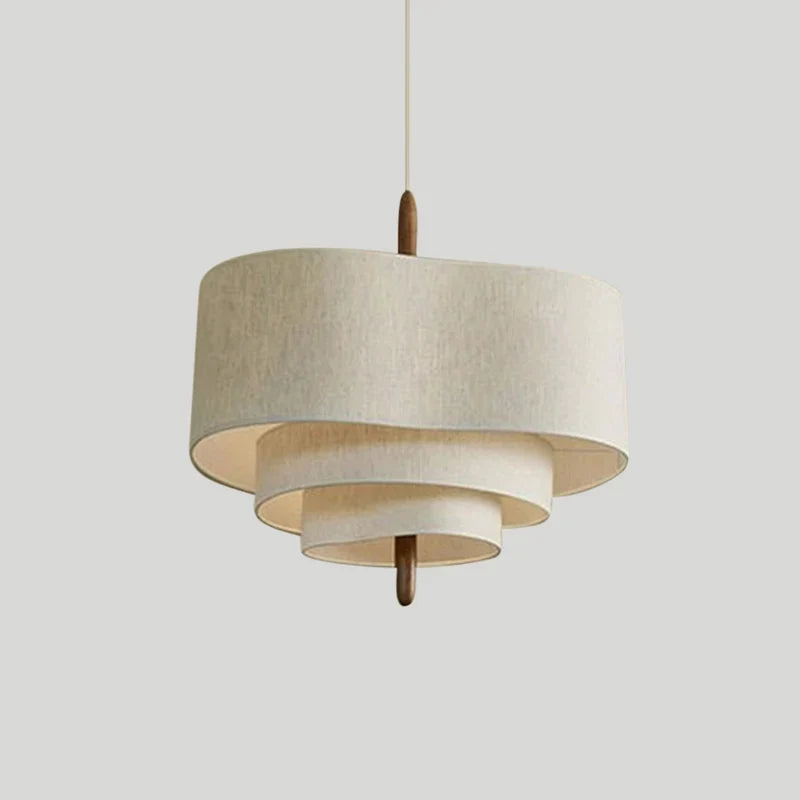
Lumora Modern Crystal Chandelier, $549, and Velora Tiered Pendant, from $450, when you want the ceiling to be the focal point.
Browse bedroom light fixtures for the full range.
The bedside: the layer that gets used most
Here is the honest truth about bedroom lighting: the bedside light is the one you will touch every single day, and the ceiling light is the one you will use least. Budget accordingly.
You have three options, and the right one depends on your bedside table.
Table lamps are the simplest. They work anywhere, they need no wiring, and you can move them. The cost is surface area, and small bedside tables lose most of it to a lamp base.
Wall lights free the table completely, and they can be aimed. This is the choice if you read in bed and your partner does not, because a wall mounted light can throw light onto your book and almost nowhere else. The Sabizter Glass Wall Lamp, from $299, works in this role. See more in wall lamps.
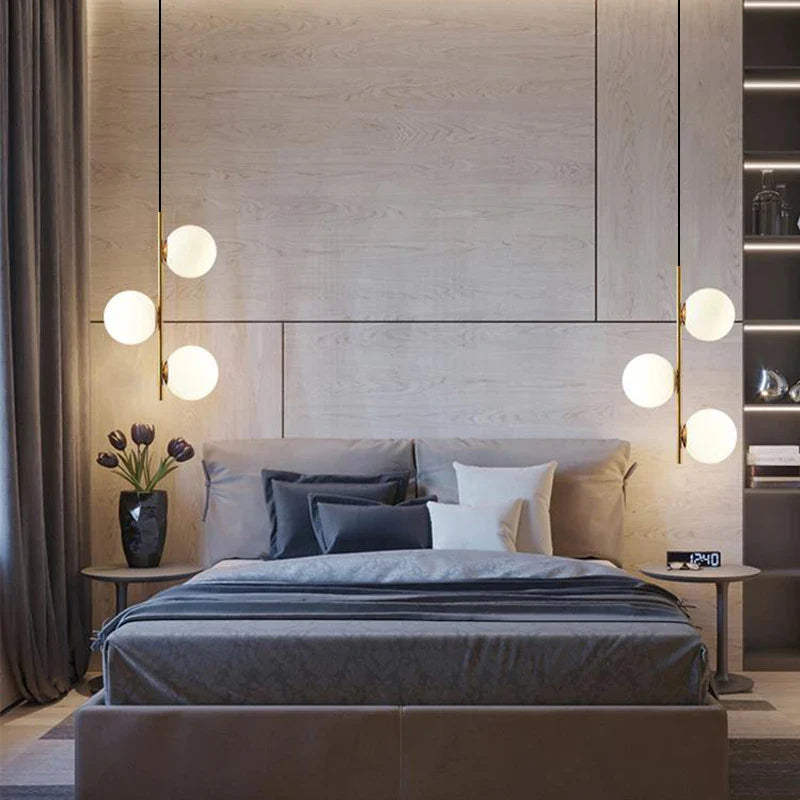
Pendants hung either side of the bed are the designer move. Two small pendants dropped to roughly bedside table height look considered and save the table surface. They need to be positioned during wiring, so this is a renovation decision, not a weekend one. The Chandler Pendant Light, $549, and The Crystal Pendant, $429, both suit this.
Whichever you pick, put the bedside lights on their own switch reachable from the bed. Getting up to turn off the main light and then navigating back in the dark is a design failure, not a minor inconvenience.
The dressing area and the mirror
If you get ready in the bedroom, this is where lighting stops being decorative and starts being practical.
The rule for mirrors is light on your face, not above your head. A ceiling light directly above a mirror throws shadow straight down into your eye sockets, which is why hotel bathrooms are so unflattering. Light from the sides, at roughly face height, is what you want. Wall lights either side of the mirror, or a lit mirror, both solve it.
NYRA carries lit mirrors including the Miran Arch LED Lighted Mirror, from $1,299, and the Hollywood Vanity Leaning Mirror, $1,400.
For wardrobes, the same principle as kitchens applies: light inside the space, not just outside it. A wardrobe lit only by the room light is a wardrobe where every garment looks the same colour.
Colour temperature: this one is not just aesthetics
In a kitchen, colour temperature is a style choice. In a bedroom, it is closer to a health one.
Warm white, 2700K to 3000K, is what you want for anything you use in the evening. It is warmer, lower in blue content, and it reads as "the day is ending."
Cooler light, 4000K and above, is stimulating. It has a place if you have a dressing area where you need accurate colour in the morning. It has no place beside your bed.
If you do one thing from this article, make it this: put your bedside lights on warm white and make them dimmable. NYRA fixtures can be specified in warm, neutral or cool white, and can be made dimmable with a compatible dimmer switch.
Layers, again, but for bedrooms
The same three layer principle from the rest of the house applies here, it just looks different.
Ambient is your ceiling fixture. Bright enough to clean the room, used rarely.
Task is your bedside lights and your mirror lights. This is the layer you actually live with.
Accent is optional and it is where bedrooms get atmosphere. A lamp on a chest of drawers, a low light in a reading corner, light washing a textured wall. None of it helps you see. All of it makes the room feel finished.
Look at table and floor lamps for this layer.
What to avoid
A single central ceiling light as the only source. It flattens the room and it is the wrong light for every task in it.
Anything bright and cool aimed near the bed.
A bedside light you cannot switch off from the bed.
Mixed colour temperatures across the room. As in kitchens, consistency matters more than the specific number you choose.
A fixture sized by eye rather than by the room. Undersized ceiling fixtures are the most common error, and the length plus width formula above takes ten seconds to run.
Not sure on scale?
Bedroom fixtures are unusually easy to get wrong on size, because the room is smaller and the ceiling is often lower than you think. NYRA offers free one to one video consultations. Send your room dimensions, ceiling height and a photo if you have one, and the team will recommend the right diameter and drop.
Browse bedroom lighting, or book a free consultation.
FAQ
What size chandelier do I need for a bedroom?
Add the room's length and width in feet, and use that number in inches as the diameter. A 12ft by 14ft room suits roughly a 26 inch fixture. Size up slightly for ceilings above 2.7m.
How high should a bedroom chandelier hang?
Keep the bottom at least 2.1m from the floor. If it is centred over the bed, allow 75 to 90cm above mattress height.
What is the best colour temperature for a bedroom?
Warm white, 2700K to 3000K, particularly for bedside and evening lighting. Cooler light is stimulating and belongs in a dressing area at most, never beside the bed.
Are wall lights better than table lamps beside a bed?
Wall lights free up your bedside table and can be aimed at your book rather than across the bed, which matters if you read and your partner does not. Table lamps are simpler and need no wiring. Both work, it depends on how much table surface you have.
Should bedroom lights be dimmable?
Ideally yes, especially bedside lights. Dimming is what allows the same fixture to work for reading and for winding down. NYRA fixtures can be made dimmable with a compatible dimmer switch.


Leave a comment
All comments are moderated before being published.
This site is protected by hCaptcha and the hCaptcha Privacy Policy and Terms of Service apply.